
From Self-Reliance to Shared Survival
The Salt PathRay and Moth begin by trying to manage alone, but repeated encounters teach them that accepting and offering help are essential parts of surviving homelessness.
increasing Bearing strength in each event
 decreasing
Bearing strength in each eventdecreasingTrying Not to Be a Burden
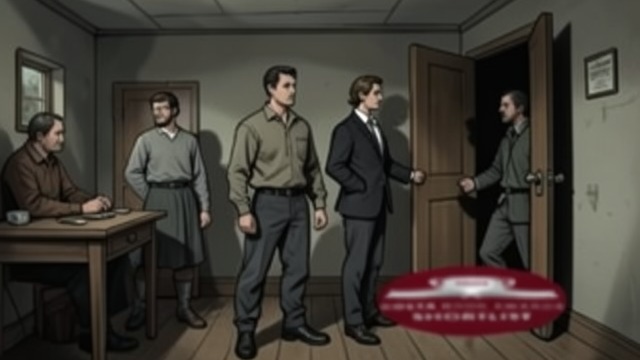
Trying Not to Be a Burden
Hospitality has a limit
The couple stay with friends but leave before they overstay their welcome. They understand that borrowed bathrooms, floors, and kitchens cannot become permanent housing without straining relationships.
Their determination to manage independently comes partly from pride and partly from fear of exhausting goodwill. It makes the eventual need to ask strangers for help emotionally difficult.
Accepting a Warm Pub
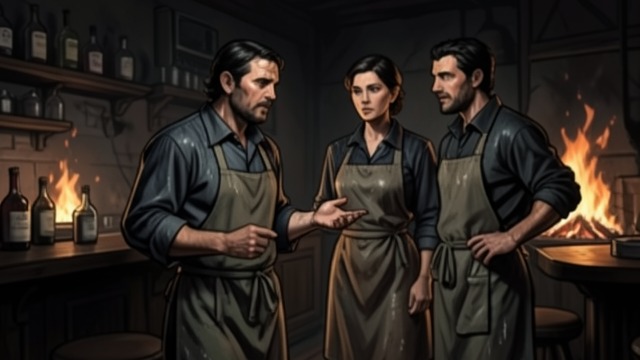
Accepting a Warm Pub
A pause in the weather
The barman welcomes the soaked couple, gives them a place by the fire, and allows them to dry. Ray and Moth accept tea even though they are anxious about spending money.
The encounter shows that accepting kindness does not make them helpless. It allows them to recover enough to continue, while preserving their dignity as guests rather than supplicants.
The Orchard’s Full Table
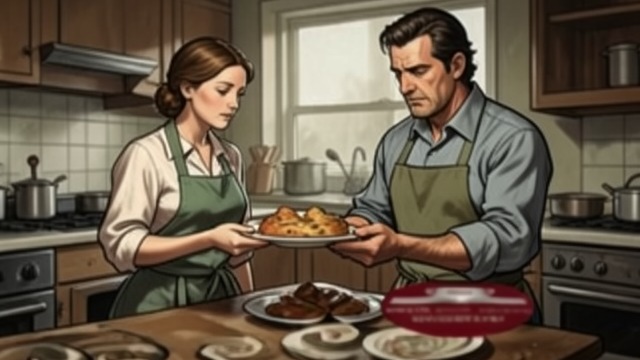
The Orchard’s Full Table
Care with complications
Grant offers the couple a shower, beer, and a large meal after they have been struggling with thirst and hunger. Ray accepts the help while noticing the social performance and uneven power in the household.
The scene complicates the idea of generosity. Help can be genuine and useful even when the host’s motives or self-presentation are not entirely straightforward.
A Hidden Village Welcomes Them
A Hidden Village Welcomes Them
Safety among people like them
John and Gav invite the couple to camp in a forest community after Ray has been ill. The residents share food, explain their living arrangements, and make space for a tent.
The welcome is based on recognition rather than pity. Ray and Moth are treated as people who understand what it means to lack a secure home.
Giving Help Forward
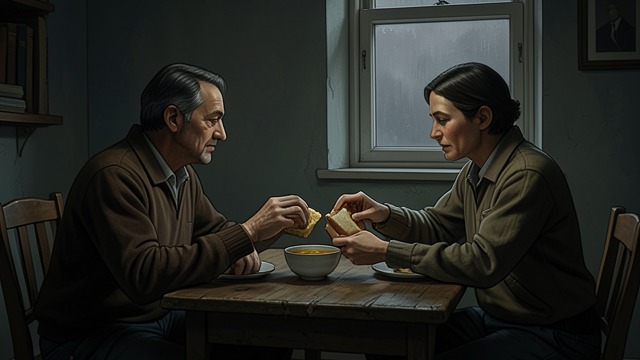
Giving Help Forward
Mutual care takes shape
Ray and Moth give food to Colin and other people they meet, even though their resources remain limited. Their own experience of being helped makes them more attentive to immediate needs around them.
They do not mistake a sandwich or a chocolate bar for a solution to homelessness. They understand it as a human response that can matter in the moment.
During the first weeks after leaving home
During the storm near Lynmouth
During the heat crisis near Duckpool
During the second journey near Weymouth
During the later nights in Plymouth
